Why Northwest Edmonton Stucco Demands Local Expertise
A homeowner in Castle Downs looked at her west-facing wall on the second cold morning in November and saw what she had been ignoring since spring. The horizontal hairline crack she remembered from April had opened, branched, and now ran roughly four feet across the cement plaster stucco above the kitchen window. The shrub-line below the crack showed dark streaking on the foundation parging where summer rain had been finding its way behind the cladding. The house was built in 1979, finished in three-coat portland cement plaster, and had not been touched in 47 years. This pattern repeats across hundreds of Castle Downs streets every winter, and it is the reason a stucco contractor Northwest Edmonton property owners hire needs to understand the specific failure modes the Alberta climate produces in residential cement plaster from the 1970s and 1980s installation era. Generic exterior contractors do not have this context. A stucco contractor Northwest Edmonton homeowners can rely on does.
Northwest Edmonton spans roughly 35 neighbourhoods bounded by Yellowhead Trail to the south and 97 Street to the east, with Anthony Henday Drive ringing the western and northern edges. The quadrant carries three distinct stucco demand profiles that no single national playbook addresses correctly. Castle Downs and the older standalone neighbourhoods (Westmount, Calder, Lauderdale, Athlone, Dovercourt, Rosslyn) carry mature cement plaster stucco from the 1970s through the 1990s that is now reaching end-of-life simultaneously. The Palisades represents the 1980s and 1990s build era with mid-life cladding starting to show wear. Big Lake (Hawks Ridge, Starling, Trumpeter) and Griesbach represent the post-2010 new construction zone with current EIFS and acrylic stucco systems. Each demand profile requires a different approach, which is why a stucco contractor Northwest Edmonton residents trust needs to read the housing stock first before quoting a job.
Castle Downs Was Named After European Castles in the 1970s
Castle Downs was originally established in 1971 through the Castle Downs Outline Plan and extended northward in 1983, becoming the first area in Edmonton to be named in a thematic way. The neighbourhoods (Baranow, Baturyn, Beaumaris, Caernarvon, Canossa, Carlisle, Chambery, Dunluce, Elsinore, Lorelei, Rapperswill) carry European castle names chosen to recognize the different ethnic groups in the area. The naming pattern is also why so much of the cement plaster stucco across the entire grid is reaching end-of-life simultaneously today.
Alberta Stucco Switched From Cement to EIFS Between 2000 and 2004
The Alberta residential stucco industry shifted from portland cement plaster to EIFS as the dominant cladding system across roughly a four-year window from 2000 to 2004. The driver was performance reality. Cement plaster could not accommodate the expansion-contraction stress of Alberta freeze-thaw cycling on residential walls with interior moisture and thermal management, while EIFS (originally developed in postwar Germany for cold-climate retrofit) was engineered exactly for this use case. Cement plaster remains viable today on warehouses, storage buildings, and barns where interior conditions are less demanding.
Griesbach Was Built on a 620-Acre Former Military Base
The Griesbach community in Northwest Edmonton occupies the 620-acre former Canadian Forces army base bounded by 153 Avenue NW, Castle Downs Road NW, 137 Avenue NW, and 97 Street SW. The base was transferred to Canada Lands Company for redevelopment as a non-military residential neighbourhood, designed for 13,000 residents under heritage-inspired architectural guidelines and developed as a LEED ND pilot project. Every street and monument is named after a Canadian Forces member, and the new construction across the community uses primarily EIFS and acrylic stucco systems calibrated to the post-2010 Alberta Building Code envelope standards.
The Castle Downs Cement Plaster End-of-Life Wave
Castle Downs was originally established in 1971 through the Castle Downs Outline Plan and extended in 1983, with neighbourhoods named after European castles in a thematic pattern that still defines the area today. Baranow, Baturyn, Beaumaris, Caernarvon, Canossa, Carlisle, Chambery, Dunluce, Elsinore, Lorelei, and Rapperswill all carry housing stock from the same 15-year window, and that window happens to align with the dominant Alberta residential cladding choice of the era: portland cement plaster three-coat stucco over wire lath. The system delivered a hard, durable, fire-resistant exterior that performed adequately for two decades. The Alberta climate then began doing what cement plaster could not handle.
Edmonton experiences temperature swings from -30°C winter extremes to +30°C summer highs across the same calendar year. Cement plaster stucco walls expand and contract with that swing. The hardness of the second-layer brown coat that gives cement plaster its impact resistance also makes it unable to flex with the building. After 25 to 35 years of expansion-contraction cycling, hairline cracks appear in the finish coat. After 35 to 45 years, those cracks open wide enough to admit water, which freezes inside the wall assembly during the next cold snap, expands, and accelerates the failure cycle. This is the single most important reason cement plaster stucco lost the Alberta residential cladding market between 2000 and 2004 and EIFS took its place. A stucco contractor Northwest Edmonton homeowners hire to look at a 1980s Castle Downs wall needs to recognize this pattern at first inspection rather than treating each crack as a cosmetic touch-up.
The diagnostic sequence on a 40-plus-year-old Castle Downs cement plaster wall starts with a visual survey at grade level, moves to moisture meter mapping at every suspect area, includes selective probing where moisture readings spike, and inspects flashing details and window perimeters where most water entry actually originates. Efflorescence (white mineral deposit on the stucco surface) signals internal moisture migration and indicates the wall has been wet long enough to leach soluble salts to the surface. Bulging indicates that water has been trapped behind the stucco for at least one full freeze cycle, expanding and pushing the cladding outward. None of this can be diagnosed reliably from a photo or a casual walkaround. It requires a Northwest Edmonton stucco contractor trained on Alberta climate failure patterns specifically.
The Big Lake and Griesbach New Construction Reality
The opposite end of the Northwest Edmonton stucco market sits in Big Lake (Hawks Ridge, Starling, Trumpeter) and Griesbach, where post-2010 construction means current Alberta Building Code envelope detailing and current cladding system specifications. The 620-acre Griesbach redevelopment, run by Canada Lands Company on the former Canadian Forces army base bounded by 153 Avenue NW, Castle Downs Road NW, 137 Avenue NW, and 97 Street SW, was designed for 13,000 residents under heritage-inspired architectural guidelines. The new construction across Big Lake and Griesbach overwhelmingly uses EIFS or acrylic stucco rather than the cement plaster that defined the previous generation.
EIFS (Exterior Insulation and Finish System) assembles in distinct layers. The water-resistive barrier goes on the sheathing first, either liquid-applied or sheet-applied. Expanded polystyrene (EPS) or extruded polystyrene (XPS) rigid foam insulation board attaches next, either adhered or mechanically fastened. The base coat goes on with fibreglass reinforcing mesh embedded in it. A primer coat goes on top of the base. The acrylic finish coat completes the system. The result delivers R-3 to R-5 per inch of continuous insulation, which eliminates the thermal bridging that occurs through wall studs in conventional construction. Up to 55 percent reduction in air infiltration compared to standard brick or wood construction. EIFS originated in postwar Germany specifically for cold-climate retrofit applications. The Alberta climate is exactly the use case the system was engineered for.
The 2026 Edmonton installed cost for EIFS runs $8 to $15 CAD per square foot for standard projects with flat surfaces and straightforward finishes. Complex projects with intricate textures, architectural details, and custom colour matching run $12 to $20 CAD per square foot. Acrylic stucco (the finish coat alone, applied over EIFS or over a wire-lath base coat as a hybrid system) runs $9 to $15 CAD per square foot. Cement plaster stucco still has applications and runs $6 to $12 CAD per square foot installed, though almost exclusively now on warehouses, storage buildings, and barns where interior moisture management is not a concern. Selecting the right system for a Big Lake new construction or a Griesbach heritage-pattern home requires a stucco contractor Northwest Edmonton property owners trust to read the project requirements rather than defaulting to a single product.
Why Drainable EIFS Matters in Alberta
Early-1990s EIFS installations across North America earned the system a reputation for moisture problems that took two decades to fully shed. The original face-sealed barrier-type EIFS relied on the finish coat itself to keep water out, and any failure point (a missed sealant joint, a window penetration without proper flashing, a damaged area from impact) admitted water that then had nowhere to drain. The industry response was the drainage plane, sometimes called drainable EIFS. A 10-millimetre drainage cavity behind the insulation board allows any water that does penetrate the finish to drain to the bottom of the wall and exit through weep holes rather than saturating the substrate.
For Northwest Edmonton properties, drainable EIFS is the right specification for nearly every new residential installation. Wind-driven rain off the prairies, sustained snow accumulation against walls during long winters, and the freeze-thaw cycling that follows all create conditions where face-sealed barrier systems eventually leak. A stucco contractor Northwest Edmonton homeowners hire for new EIFS installation should specify drainable assembly with a documented water-resistive barrier, fibreglass mesh fully embedded in the base coat, and proper flashing at every penetration. Cutting these specifications to save $1 to $2 per square foot on the project budget creates the exact failure pattern that gave EIFS its 1990s reputation.
Stucco Repair Cost Reality in Northwest Edmonton
Repair pricing varies widely with damage type, scope, and access conditions. Hairline crack sealing on accessible single-storey walls runs $6 to $15 CAD per square foot of affected area. A 50-square-foot wall section repair with texture matching typically runs around $800 CAD. Water-damage substrate repair, which means the wall has rotted sheathing or wet insulation behind the stucco, starts at $1,000 CAD and climbs to $5,000-plus CAD depending on how far the damage extends. Texture matching adds $2 to $6 CAD per square foot because matching sand size, pigment, and finish consistency across a 40-year-old Castle Downs cement plaster wall takes test batches and judgment that a standardized patch product cannot deliver.
Scaffolding adds $200 to $400 CAD on upper-storey access. Winter repairs cost more than spring or fall repairs because dry-day curing requirements force temporary heating and protection during application. Edmonton's climate suspends most stucco work below freezing because cement-based and acrylic-based finishes cannot cure properly without consistent above-zero temperatures, and any work attempted at -30°C requires enclosure and supplemental heat that adds substantial cost. Scheduling repairs in May through September when possible cuts the all-in cost meaningfully. A stucco contractor Northwest Edmonton residents call should explain the seasonal pricing dynamic upfront rather than burying it in a winter quote.
The Parging Reality Most Homeowners Underestimate
Parging is the cement-based protective coating applied over the exposed concrete foundation between grade and the bottom of the wall cladding. Its function in Northwest Edmonton is not primarily aesthetic. Parging protects the foundation from moisture, frost exposure, and freeze-thaw deterioration of the concrete itself. When parging cracks, spalls, or falls away, the concrete underneath begins absorbing water, and the same freeze-thaw cycle that destroys cement plaster stucco above starts working on the foundation below.
Edmonton parging applications run over different foundation types: poured concrete (most common), pressure-treated wood foundations (less common but still present in some 1970s and 1980s Castle Downs construction), and ICF (insulated concrete form) foam in newer Big Lake and Griesbach builds. Each substrate requires different prep and bonding agents. Edmonton 2026 installed parging cost runs $5 to $10 CAD per square foot. Parging repair on damaged or crumbling foundation coatings is one of the most cost-effective preventive maintenance jobs available to Northwest Edmonton homeowners, and bundling it with stucco repair or stucco painting work reduces the per-job overhead. A stucco contractor Northwest Edmonton property owners hire for full envelope service should be able to address parging as part of the same scope rather than referring it to a separate trade.
Stucco Painting and Recoating as the Middle Path
Not every aging Castle Downs cement plaster wall needs full replacement. When the underlying stucco is structurally sound but cosmetically tired (faded colour, chalky surface, hairline crack network without water damage behind it), elastomeric coating delivers a 10 to 15 year refresh at a fraction of the replacement cost. Elastomeric coatings run $5 to $7 CAD per square foot installed and bridge hairline cracks that rigid paint cannot span. The breathable acrylic latex specification matters because non-breathable coatings trap moisture in the wall and accelerate deterioration. Prep includes cleaning, crack sealing, and primer application before the elastomeric goes on.
The 2026 colour palette across Edmonton residential stucco trends toward warm neutrals: warm cream, soft ivory, light greige, warm beige, and sandy taupe dominate the safe-resale category. Charcoal grey and modern black with light trim accents represent the contemporary aesthetic for new construction in Big Lake and select Griesbach properties. Lighter colours reflect heat better and develop fewer thermal stress cracks in Alberta climate cycling, which is the practical reason most experienced installers steer Northwest Edmonton homeowners toward warm neutrals rather than dark exteriors. A stucco contractor Northwest Edmonton clients consult on a recoat versus replace decision should walk the wall, run moisture meter checks, and explain the trade-off rather than defaulting to the more expensive option.
What to Look For in a Northwest Edmonton Stucco Contractor
Alberta requires stucco contractors to be licensed to operate legally. Verifying that license is the first vetting step. Liability insurance protects the property owner from claims if a worker is injured on site or the work damages adjacent property. Workers' compensation coverage protects the homeowner from personal liability for crew injuries. Written warranty terms should cover both materials (typically backed by the EIFS manufacturer for 5 years on premium systems) and workmanship (the contractor's own labour warranty). Verbal-only estimates and unusually low bids are the two most common red flags. A transparent written quote that breaks out materials, labour, prep, and texture matching as separate line items lets the homeowner compare apples to apples across multiple bids.
Portfolio review matters more than most homeowners realize. A contractor who can show before-and-after photos of texture-matched repairs on cement plaster from the 1970s installation era understands the Castle Downs market. A contractor who can show completed EIFS installations on Big Lake new construction understands the post-2010 build segment. The same contractor handling both demonstrates the breadth Northwest Edmonton actually requires. Online reviews on Google and BBB ratings provide third-party confirmation of the quality claims a contractor makes about their own work.
Depend Exteriors operates from 8615 176 Street NW Edmonton AB T5T 0M7, with primary service coverage across all Northwest Edmonton including the full Castle Downs grid (Baranow, Baturyn, Beaumaris, Caernarvon, Canossa, Carlisle, Chambery, Dunluce, Elsinore, Lorelei, Rapperswill), Big Lake (Hawks Ridge, Starling, Trumpeter), The Palisades (Oxford and the surrounding 1980s-1990s neighbourhoods), Griesbach, and the standalone neighbourhoods (Athlone, Dunvegan, Calder, Dovercourt, Goodridge Corners, Inglewood, Kensington, Lauderdale, Prince Charles, Rosslyn, Sherbrooke Wellington, Woodcroft, Westmount). Service area extends across the broader Edmonton metropolitan area and into St. Albert, Parkland County, Sherwood Park, Spruce Grove, Fort Saskatchewan, Beaumont, and Leduc. The 176 Street NW location provides direct Anthony Henday Drive access for cross-Edmonton dispatch and Yellowhead Trail connectivity for north-corridor service routing. Family-owned and family-operated business led by owner Hasan Yilmaz. 13-plus years operating in Edmonton with 15 years of hands-on exterior finishing expertise. Alberta licensed and bonded contractor. Liability insurance protecting client property and project investment. Manufacturer-backed material warranties on EIFS systems. Workmanship warranty on installation labour. Free estimate with transparent written quote covering materials, labour, prep, texture matching, and timeline. Extended six-day operational schedule (Monday through Friday 8 AM to 7 PM, Saturday and Sunday 8 AM to 3 PM) that exceeds standard contractor availability across Edmonton. Residential and commercial breadth across stucco, EIFS, acrylic, brick, exterior demolition, parging, repair, caulking, retrofitting, cultured and natural stone, and decorative balcony coatings. Call (780) 710-3972 to schedule a stucco contractor Northwest Edmonton consultation for properties across Castle Downs, Big Lake, The Palisades, Griesbach, and the broader Northwest Edmonton service area.
Stucco or render is a construction material made of aggregates, a binder, and water. Stucco is applied wet and hardens to a very dense solid. It is used as a decorative coating for walls and ceilings, exterior walls, and as a sculptural and artistic material in architecture. Stucco can be applied on construction materials such as metal, expanded metal lath, concrete, cinder block, or clay brick and adobe for decorative and structural purposes.[2]
In English, "stucco" sometimes refers to a coating for the outside of a building and "plaster" to a coating for interiors. As described below, however, the materials themselves often have little or no difference. Other European languages, notably Italian, do not have the same distinction: In Italian, stucco means plaster, and serves for both.[3]
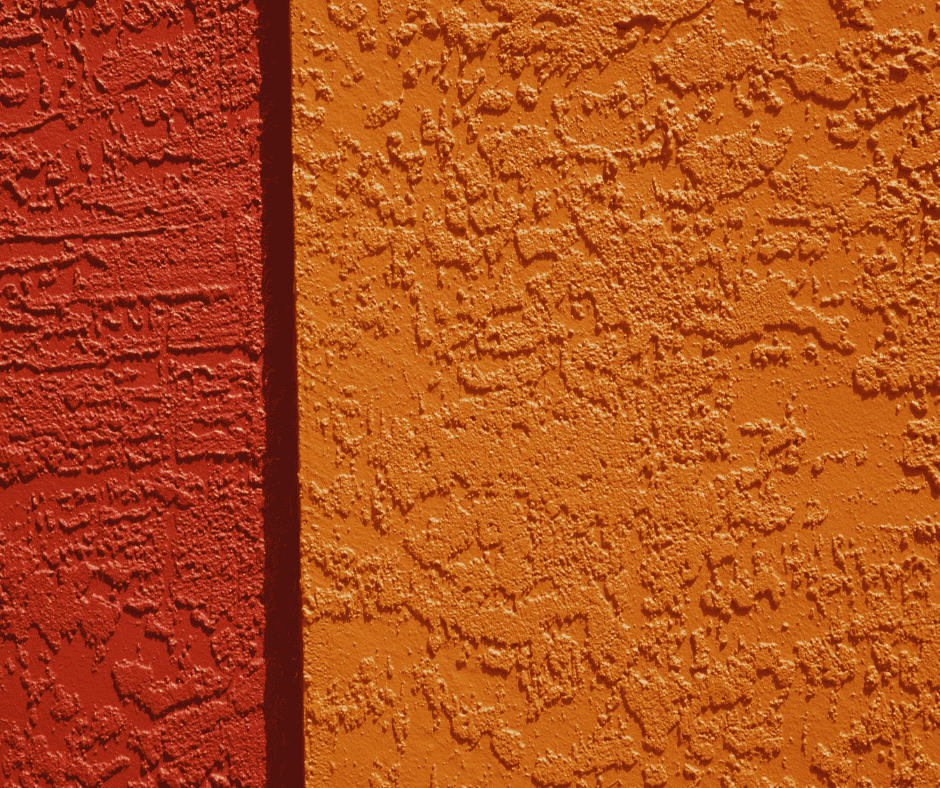
Stucco used as an exterior coating on a residential building.Rock dash stucco used as an exterior coating on a house on Canada's west coast. The chips of quartz, stone, and colored glass measure approx. 3–6 mm (1/8–1/4").
The basic composition of stucco is lime, water, and sand.[4]
The difference in nomenclature between stucco, plaster, and mortar is based more on use than composition. Until the latter part of the nineteenth century, it was common that mortar as well as plaster, which was used inside a building, and stucco, which was used outside, would consist of the same primary materials: lime and sand.
Animal or plant fibers were often added for additional strength. Sometimes additives such as acrylics and glass fibers are added to improve the structural properties of the stucco. This is usually done with what is considered a one-coat stucco system, as opposed to the traditional three-coat method.
In the latter nineteenth century, Portland cement was added with increasing frequency to cover surfaces in contact with soil or water. At the same time, traditional lime plasters were often being replaced by gypsum plaster. Lime is almost as good in balancing humidity as clay. It prevents moisture accumulation inside the building as well as in the wall by its excellent permeability, and is more elastic and workable than cement render.
Lime itself is usually white; color comes from the aggregate or any added pigments. Lime stucco has the property of being self healing to a limited degree because of the slight water solubility of lime (which in solution can be deposited in cracks, where it solidifies). Portland cement stucco is very hard and brittle and can easily crack and separate from the surface if the base on which it is applied is not stable. Typically, its color was gray, from the innate color of most Portland cement, but white Portland cement is also available. Today's stucco manufacturers offer a very wide range of colors that can be mixed integrally in the finish coat. Other materials such as stone and glass chips are sometimes "dashed" onto the finish coat before drying, with the finished product commonly known as "rock dash", "pebble dash", or also as roughcast if the stones are incorporated directly into the stucco, used mainly from the early 20th through the early 21st centuries.
As a building material, stucco is a durable, attractive, and weather-resistant wall covering. It was traditionally used as both an interior and exterior finish applied in one or two thin layers directly over a solid masonry, brick, or stone surface. The finish coat usually contained an integral color and was typically textured for appearance.
Then with the introduction and development of heavy timber and light wood-framed construction methods, stucco was adapted for this new use by adding a reinforcement lattice, or lath, attached to and spanning between the structural supports and by increasing the thickness and number of layers of the total system. The lath added support for the wet plaster and tensile strength to the brittle, cured stucco; while the increased thickness and number of layers helped control cracking.
The traditional application of stucco and lath occurs in three coats—the scratch coat, the brown coat and the finish coat. The two base coats of plaster are either hand-applied or machine sprayed. The finish coat can be troweled smooth, hand-textured, floated to a sand finish or sprayed.
Originally, the lath material was strips of wood installed horizontally on the wall, with spaces between, that would support the wet plaster until it cured. This lath and plaster technique became widely used.
In exterior wall applications, the lath is installed over a weather-resistant asphalt-impregnatedfelt or paper sheet that protects the framing from the moisture that can pass through the porous stucco.
Following World War II, the introduction of metal wire mesh, or netting, replaced the use of wood lath. Galvanizing the wire made it corrosion resistant and suitable for exterior wall applications. At the beginning of the 21st century, this "traditional" method of wire mesh lath and three coats of exterior plaster was still widely used.
In some parts of the United States with a warmer climate (like California, Nevada, Arizona, New Mexico and Florida), stucco is the predominant exterior for both residential and commercial construction. Stucco exterior (with wood frame interior) became a popular alternative in the southwestern United States during the 1970s, as the masonry labor costs for adobe rose.[5]
Iranian relief plaque with confronted ibexes; 5th or 6th century AD (the Sasanian period); stucco originally with polychrome painting; Cincinnati Art Museum (Cincinnati, US)
Maya wall panel depicting Ix K'an Bolon; c. 790 AD(Late Classic period); limestone, stucco and paint; from Pomona (Tabasco), Mexico) Dallas Museum of Art (Dallas, Texas, US)
Stucco has also been used as a sculptural and artistic material. Stucco relief was used in the architectural decoration schemes of many ancient cultures. Examples of Egyptian, Minoan, and Etruscan stucco reliefs remain extant. In the art of Mesopotamia and ancient Persian art there was a widespread tradition of figurative and ornamental internal stucco reliefs, which continued into Islamic art, for example in Abbasid Samarra, now using geometrical and plant-based ornament. As the arabesque reached its full maturity, carved stucco remained a very common medium for decoration and calligraphic inscriptions. Indian architecture used stucco as a material for sculpture in an architectural context. It is rare in the countryside.
In Roman art of the late Republic and early Empire, stucco was used extensively for the decoration of vaults. Though marble was the preferred sculptural medium in most regards, stucco was better for use in vaults because it was lighter and better suited to adapt to the curvature of the ceiling. Baroque and Rococo architecture makes heavy use of stucco. Examples can be found in churches and palaces, where stucco is mostly used to provide a smooth, decorative transition from walls to ceiling, decorating and giving measure to ceiling surfaces. Stucco is an integral part of the art of belcomposto, the Baroque concept that integrates the three classic arts, architecture, sculpture, and painting.
The Greco-Buddhist art of modern Afghanistan and northern Pakistan made extensive use in monasteries and temples of stucco for three-dimensional monumental sculpture as well as reliefs. These were usually carved from a rough modelling over a framework and then painted. Similar techniques are used for the life-size statues decorating the gopurams of Hindu temples in modern South Asia.
Since stucco can be used for decoration as well as for figurative representation, it provides an ideal transitive link from architectural details to wall paintings such as the typically Baroque trompe-l'œil ceilings, as in the work of the Wessobrunner School. Here, the real architecture of the church is visually extended into a heavenly architecture with a depiction of Christ, the Virgin Mary or the Last Judgment at the center. Stucco is used to form a semi-plastic extension of the real architecture that merges into the painted architecture.
Because of its "aristocratic" appearance, Baroque-looking stucco decoration was used frequently in upper-class apartments of the 19th and early 20th century.
Beginning in the 1920s, stucco, especially in its Neo-Renaissance and Neo-Baroque materialization, became increasingly unpopular with modern architects in some countries, resulting not only in new buildings without stucco but also in a widespread Movement [de] to remove the stucco from existing tenements.
Stucco was still employed in the 1950s in molded forms for decorating the joints between walls and ceilings inside houses. It was generally painted the same colour as the ceiling and used in designs where a picture rail or rat rail was in use.
Modern stucco is used as an exterior cement plaster wall covering. It is usually a mix of sand, Portland cement, lime and water, but may also consist of a proprietary mix of additives including fibers and synthetic acrylics that add strength and flexibility. Modern synthetic stucco can be applied as one base layer and a finish layer, which is thinner and faster to apply, compared to the traditional application of three-coat stucco. Imitation stone stucco can also be produced using the traditional application, but with marble dust being added to the mixture.
Applying stucco
As with any cement-based material, stucco must be reinforced to resist movement cracking. Plastic or wire meshlath, attached with nails or screws to the structural framing, is embedded into the base coat to provide stiffening for the stucco.
Where stucco is to be applied to a structure of wood-framing or light-gauge steel framing, the framing is protected from moisture damage by applying a cement based primer, or a vapor-permeable, water-resistant weather barrier; typically an asphalt-saturated paper or one of a variety of manufactured plastic-based sheets, known as "building wraps" or "stucco wraps". The properties of the weather barrier must not only protect the framing from rain and moisture, but at the same time allow the free passage of any water vapor generated inside the building to escape through the wall.
A wide variety of stucco accessories, such as weep screeds, control and expansion joints, corner-aids and architectural reveals are sometimes also incorporated into the lath. Wire lath is used to give the plaster something to attach to and to add strength. Types include expanded-metal lath, woven-wire lath, and welded-wire lath.
The tools used to plaster walls
If applied during very dry weather, the layers of stucco are sprayed with water for one or more days to keep a level of moisture within the stucco while it cures, a process known as "moist curing". If the stucco dries too soon, the chemical hardening ("hydration") will be incomplete, resulting in a weaker and brittler stucco.
Ling, Roger, ed. (1999). Stuccowork and Painting In Roman Italy. Aldershot: Ashgate.
Wadsworth, Emily (1924). "Stucco Reliefs of the First and Second Centuries still Extant in Rome". Memoirs of the American Academy in Rome. 4 (4): 9–102. doi:10.2307/4238518. JSTOR4238518.
Beard, Geoffrey (1983). "Stucco and Decorative Plasterwork in Europe". cite journal: Cite journal requires |journal= (help)
Why is so much cement stucco in Castle Downs failing right now?
Castle Downs neighbourhoods were predominantly built in the 1970s and 1980s following the 1971 Castle Downs Outline Plan and 1983 extension, with portland cement plaster three-coat stucco as the dominant cladding choice of the era. Cement plaster is hard and durable but inflexible, and 35 to 45 years of Alberta freeze-thaw cycling produces expansion-contraction stress that the second-layer brown coat cannot accommodate. Hairline cracks open into wider cracks, water enters the wall assembly, freezes, expands, and accelerates the failure. This is the climate-driven performance reality that pushed the Alberta industry to shift from cement plaster to EIFS as the dominant residential cladding system between 2000 and 2004. Castle Downs cement stucco is now reaching end-of-life simultaneously across the entire neighbourhood grid.
How much does stucco work cost in Northwest Edmonton in 2026?
Pricing varies widely by service type and project scope. New EIFS installation runs $8 to $15 CAD per square foot for standard projects and $12 to $20 CAD per square foot for complex work with intricate textures and architectural details. Acrylic stucco runs $9 to $15 CAD per square foot. Traditional cement plaster runs $6 to $12 CAD per square foot, though it is rarely the right residential choice in Alberta. Stucco repair runs $500 to $5,000-plus depending on damage scope, with hairline crack sealing at $6 to $15 CAD per square foot and water-damage substrate work starting at $1,000 CAD. Parging runs $5 to $10 CAD per square foot. Elastomeric recoating runs $5 to $7 CAD per square foot. Final pricing depends on access, scaffolding requirements, texture matching complexity, and seasonal scheduling.
Should EIFS or acrylic stucco be installed on a Big Lake new build?
For most Big Lake and Griesbach new construction, drainable EIFS delivers the best performance for the Alberta climate. The continuous insulation layer adds R-3 to R-5 per inch of thermal performance, eliminates thermal bridging through wall studs, and reduces air infiltration by up to 55 percent compared to conventional brick or wood construction. EIFS originated in postwar Germany specifically for cold-climate applications, which makes Alberta one of its best-fit markets globally. Acrylic stucco as a finish coat over EIFS or over a wire-lath base coat is also viable and offers more design flexibility. The decision depends on insulation goals, budget, and design intent. Both systems require proper drainage plane detailing and water-resistive barrier integration to deliver their expected 25-plus year service life.